

From handwritten answers to useful feedback.
Reading exams from PDFs or photographs and preparing an initial assessment against supplied answer keys.
An initial review that teachers can check and complete.
How it takes shape.
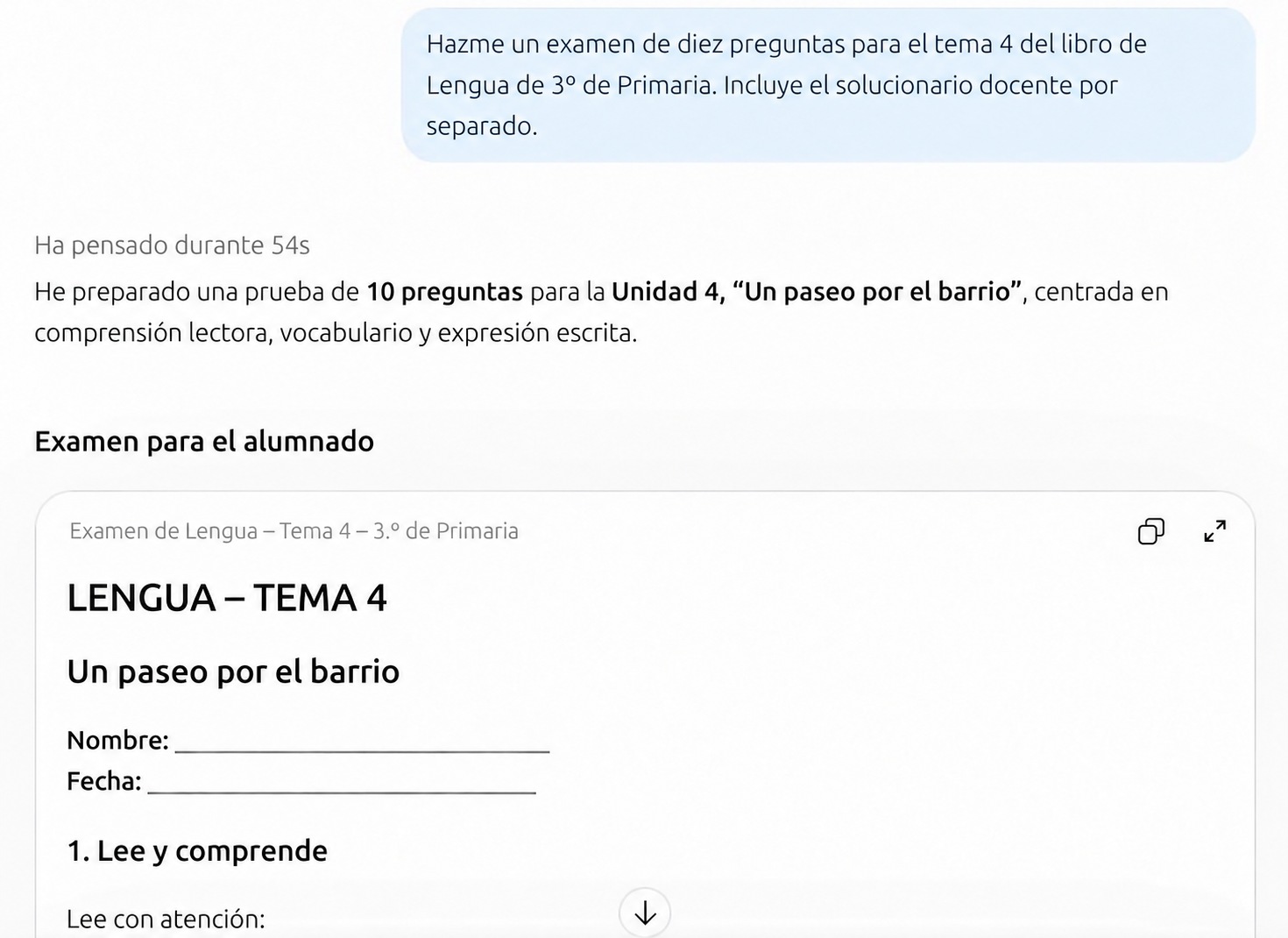
Exam paper, answer key and handwritten answers.
Exam + answer key + handwriting
Identified exercise: ½ + ¼
Recognise questions and sections
Exam questions and sections are recognised to locate each answer.
Correction: ½ + ¼ = ¾
The denominators were added; use quarters instead.
Read answers while preserving structure
Reading preserves the student’s work structure to check their reasoning.
½ = ²⁄₄ · ²⁄₄ + ¼ = ¾
Use a common denominator
Correct answer: three quarters.
Compare against the answer key
The proposal is grounded in the supplied answer key and shows what the learner should revisit.
Identified addition error
“Express the half in quarters. How many do you have?”
Indicative assessment → teacher review
Suggest feedback and assessment for each question
Initial assessment and comments are proposals: teachers check and decide the final assessment.
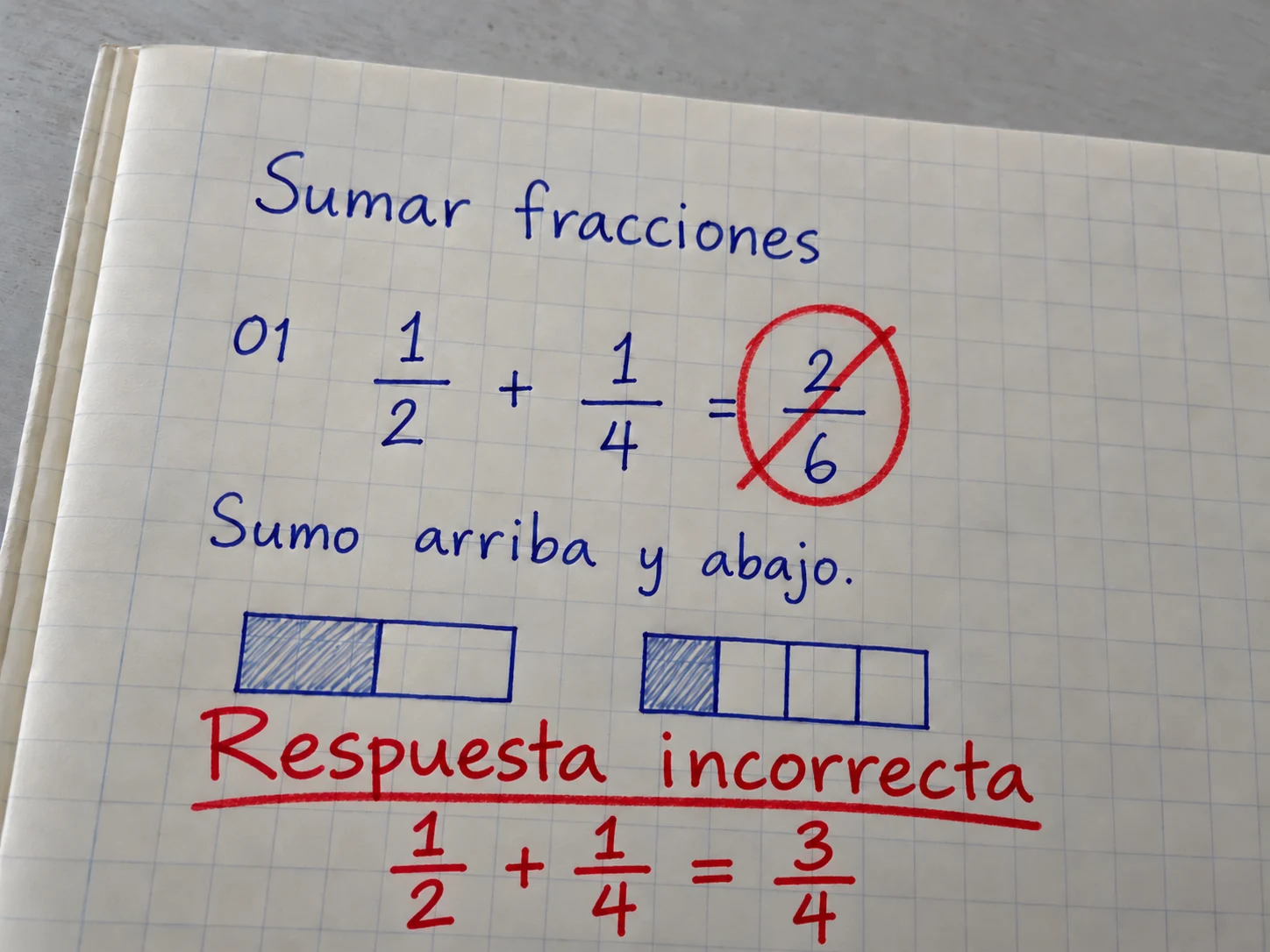 Illustrated error and correction
The denominators were added together.
“Express the half in quarters. How many do you have now?”Suggested feedback → teacher review
Less transcription and repeated checking. More time to explain how to improve.
What about your organisation?
This project demonstrates a capability we can adapt to your organisation. Let’s explore how your knowledge can help users and become new services, licences or editions, with less repetitive work.
You have the knowledge.
Let’s take it further.
New uses for your content, more time for your team and opportunities to earn revenue.